Board and batten siding is one of the most popular looks on new and remodeled homes, and it is easy to see why. Tall vertical lines make a house look taller and more custom, and the style works on everything from modern farmhouses to classic cottages. This guide explains how board and batten siding works, which materials hold up best in East Tennessee, what it costs and how to use it on your home.
In this article
What is board and batten siding?
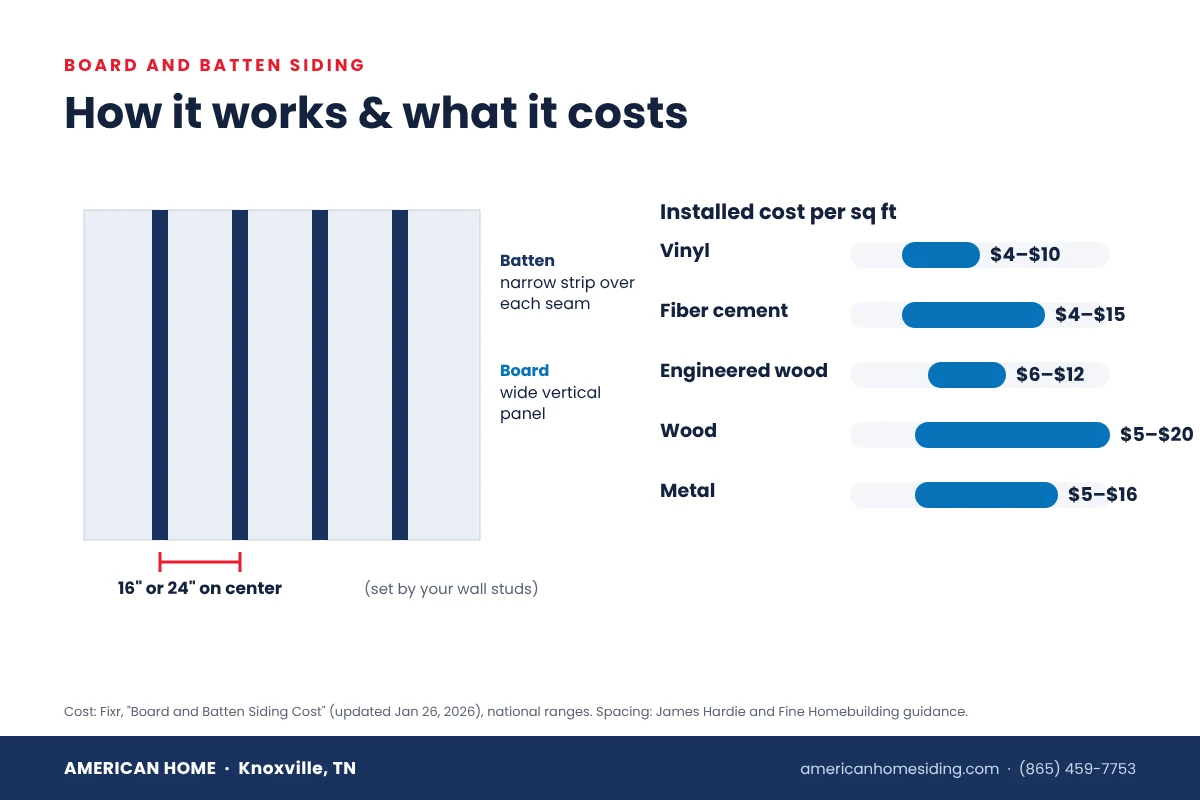
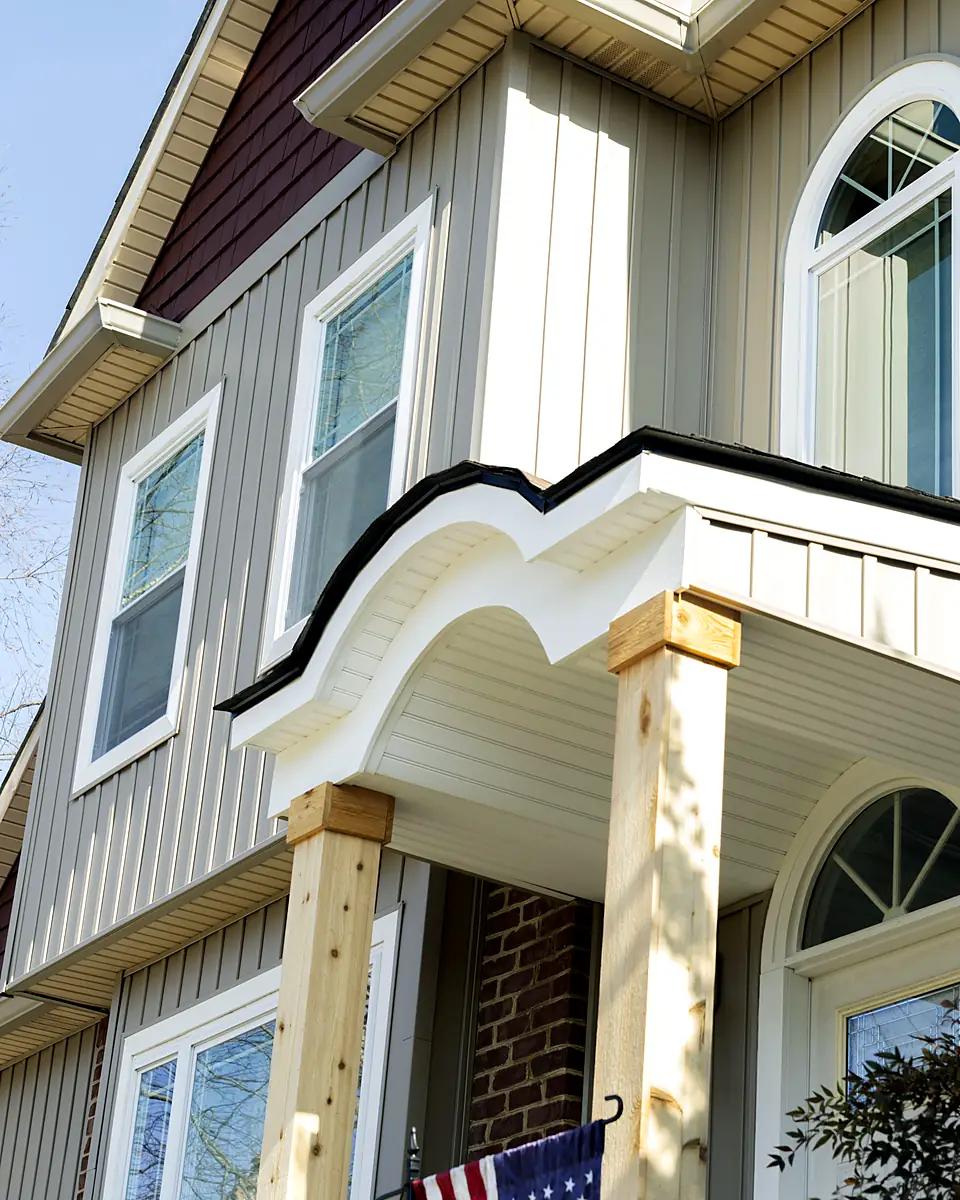
Board and batten siding is made of wide vertical boards with narrow strips, called battens, covering the seams between them. According to James Hardie, the style became popular in the United States in the mid-1800s, when farmers used it on barns because it was simple, inexpensive and helped keep buildings tight. Today the boards are usually wide panels and the battens are mostly decorative, but the look is the same.
There is also reverse board and batten, which uses narrow boards with wide battens for a bolder, more rhythmic pattern.
Board and batten spacing
Batten spacing is not random. It usually follows the wall studs so the battens can be fastened into framing. Fine Homebuilding notes that 16-inch spacing follows standard stud layout, while tighter spacing such as 12 inches needs extra blocking in the wall. As a rule of thumb:
- Wider spacing (16 to 24 inches) looks calm and modern.
- Tighter spacing adds texture and works well in gable peaks.
- Dark colors with tight battens give a sharp, contemporary look.
Best materials for board and batten siding
Fiber cement (James Hardie)
James Hardie creates the look with HardiePanel vertical siding and Hardie Trim batten boards, in smooth or wood-grain textures. Fiber cement is noncombustible, resists rot and holds paint well, which is why it is our most requested premium option. See our James Hardie siding page.
Vinyl
Alside makes a Board & Batten vertical vinyl siding with a 7-inch profile and a lifetime limited warranty, according to Alside. Vinyl is the budget-friendly way to get the look and never needs painting. Learn more about our vinyl siding.
Composite (Everlast)
Everlast makes a one-piece board and batten plank with the batten built in, which speeds installation and keeps lines straight. Like Everlast lap siding, it does not need painting. Read our Everlast siding reviews.
Wood, engineered wood and metal
Real cedar is the traditional choice but needs regular staining and can rot in humid climates like ours. Engineered wood and metal are other options, each with trade-offs in upkeep, dents and fire resistance.
How much does board and batten siding cost?
Board and batten siding cost depends mostly on the material. Fixr (updated January 2026) lists these national installed ranges:
| Material | Installed cost per sq ft |
|---|---|
| Vinyl | $4–$10 |
| Fiber cement | $4–$15 |
| Engineered wood | $6–$12 |
| Wood | $5–$20 |
| Metal | $5–$16 |
Fixr puts the national average board and batten project at about $14,000. HomeAdvisor (June 2026) reports an average of about $10,600. Labor, tear-off, trim and the size of your walls all move the price, so a written quote is the only reliable number. Our siding replacement cost guide explains what drives price.
Board and batten siding ideas
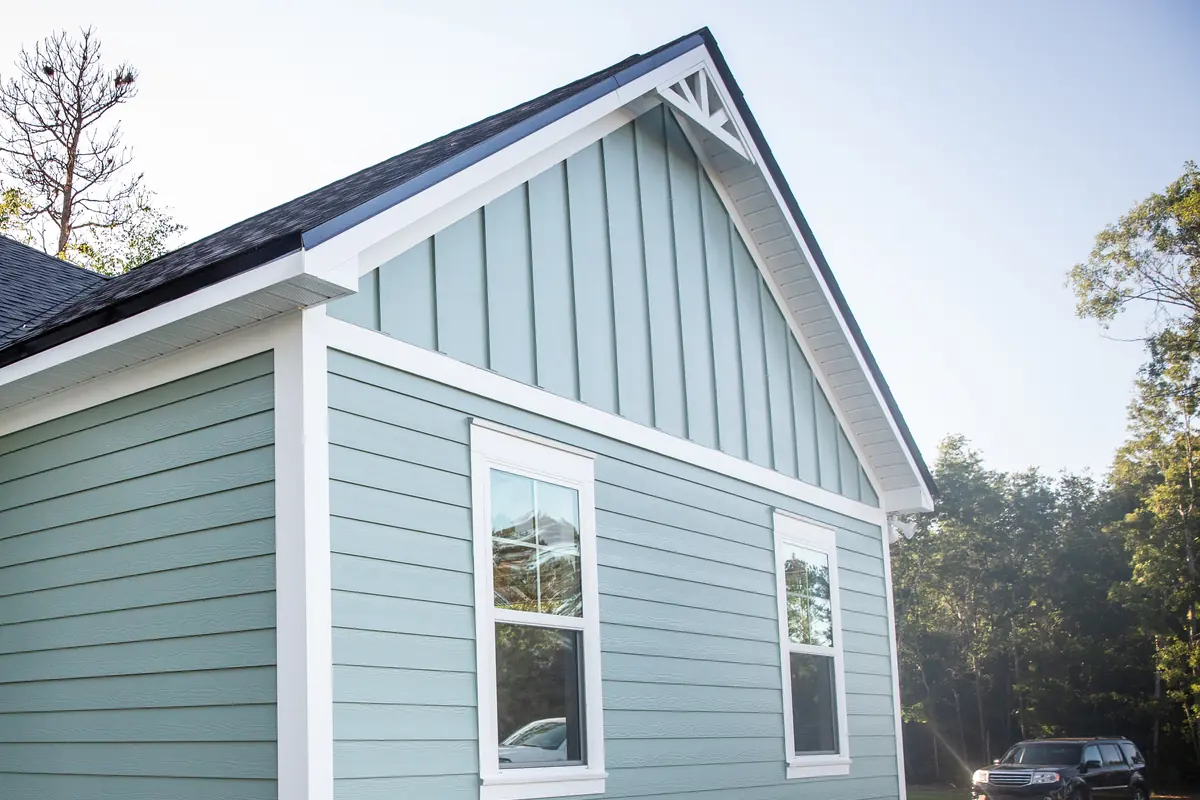
- Gable accents: board and batten in the peaks with lap siding below is a classic mix.
- All-white with black windows: the signature modern farmhouse look.
- Deep navy or charcoal: bold and modern, especially with white or black trim.
- Soft greens or light grays with stone: pair with a stone base for a warm, grounded feel. See our Tando shake and stone guide.
- Tone-on-tone: siding and trim in shades of the same color for a calm, custom look.
Installation details that matter
Vertical siding is installed differently from lap siding. Manufacturer instructions call for solid fastening into studs or blocking, flashing at horizontal joints, and battens fastened so the boards can still move with temperature changes. Getting these details right keeps water out and lines straight, which is why an experienced crew matters.
Picturing board and batten on your home? Call (865) 459-7753 or request a free in-home estimate. We will bring samples in vinyl, fiber cement and composite so you can compare them in daylight.
Board and batten siding FAQ
Is board and batten siding more expensive than lap siding?
Often a little, because of the extra battens and labor. It depends on the material. Vinyl board and batten can cost about the same as quality lap siding.
Can you mix board and batten with lap siding?
Yes. Using board and batten on gables or bump-outs with lap siding on the main walls is one of the most popular designs.
What is the best board and batten siding for East Tennessee?
Fiber cement and composite stand up best to our humidity with the least upkeep. Vinyl is the most affordable low-maintenance option. Real wood needs the most care.