Love the look of cedar shakes or a stone base but not the upkeep? That is exactly what Tando siding is built for. Tando makes composite shake and stone-look siding that installs like siding, not like real stone or wood. This guide explains what Tando is, the product lines, where it looks best on a house, and the honest pros and cons.
In this article
What is Tando siding?
Tando is a brand of Tando Composites, a division of Derby Building Products. The company renamed the division Tando Composites in January 2024. Its products are molded composite panels designed to look like hand-split shakes or stacked stone, sold in the U.S. through distributors such as Alside.
Today the line focuses on two products, according to Tando Composites:
- Beach House Shake: a cedar-shake look molded from polypropylene resins and minerals. Alside lists it as approved by Miami-Dade County for use in high-velocity hurricane zones.
- TandoStone: a stone-look panel in stacked stone and ledgestone styles that installs without mortar or adhesives.
Tando shake vs real cedar shakes
Real cedar shakes are beautiful, but in a humid climate like Knoxville’s they need regular staining or sealing to fight moisture, mildew and insects. According to the manufacturer and Alside, Beach House Shake:
- will not discolor, crack, cup or be damaged by insects,
- installs more than five times faster than natural cedar, using common nail guns,
- comes in pre-colored finishes, so there is no staining or painting.
The trade-off is choice. You pick from a set palette of factory colors (Atlantica, Pacifica, Sandcastle and Hatteras for Beach House Shake) instead of any stain color you like.
Tando stone vs real stone veneer
Traditional stone veneer is heavy and goes on with mortar, which adds labor and cost. TandoStone panels go up with standard tools and no mortar or adhesives, and the maker describes them as impervious to moisture, which suits areas near the ground and roof lines. Color options include Chestnut Hills, Glacier Bay, Lewiston Crest, Santa Fe and Sedona Bluff in stacked stone, and Appalachian Ash, Arizona Sandstone, Bucks County Gray, Nordic Mist and Rocky Mountain Clay in ledgestone.
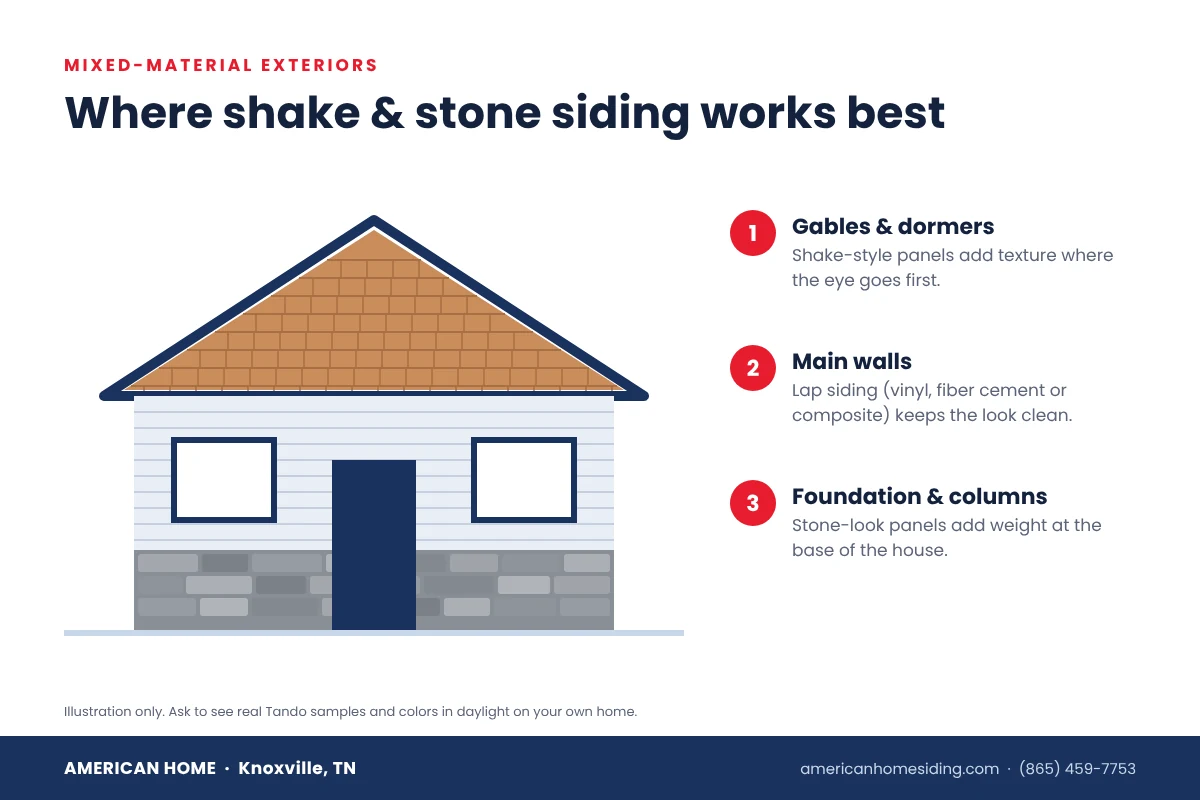
Where Tando siding looks best
Most homeowners use shake and stone as accents, not on every wall. In our experience, these spots give the most curb appeal for the money:
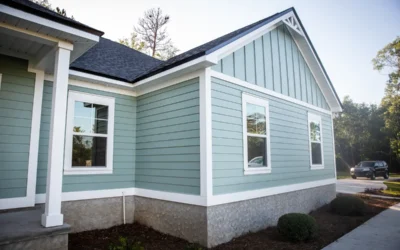
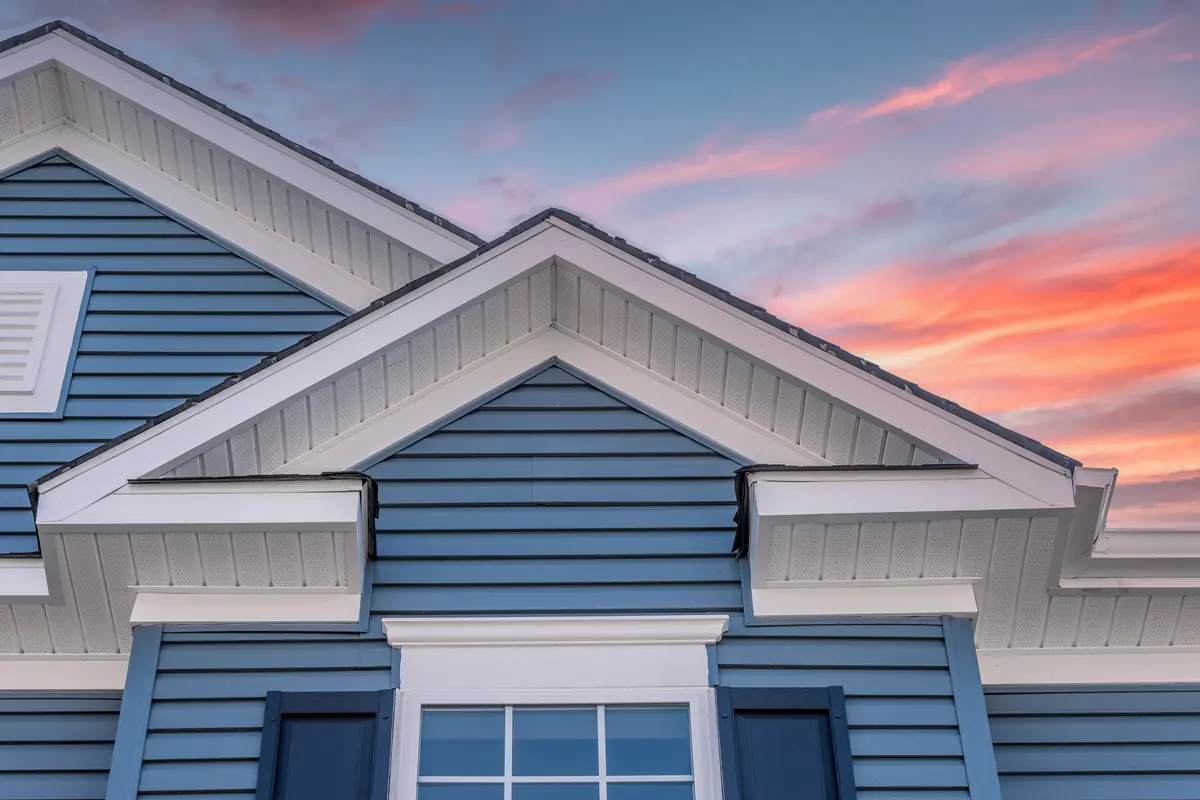
- Gables and dormers. A band of shake in the peak adds texture where the eye goes first.
- The foundation line and porch columns. Stone at the base makes the house look grounded.
- Entry walls and bump-outs. A small area of stone or shake makes the front door stand out.
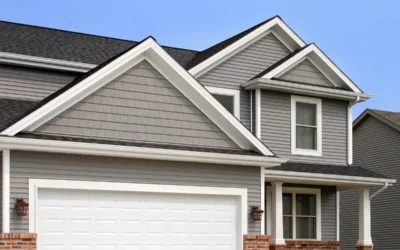
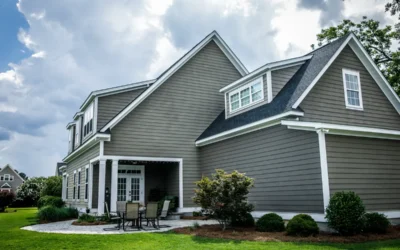
The main walls are usually covered in lap siding, such as vinyl, James Hardie fiber cement or Everlast composite. The trick is choosing colors that work together, so we recommend looking at real samples side by side.
Tando warranty
Tando Composites offers a 50-Year Performance Plus Limited Warranty on its TandoStone and Beach House Shake lines. As with any siding, the product warranty does not cover installation, so ask your contractor about their workmanship warranty too.
Pros and cons of Tando siding
Pros
- Real shake and stone looks without staining, sealing or mortar
- Faster to install than natural cedar or mortared stone
- Pairs with almost any lap siding for a mixed-material exterior
- Long manufacturer warranty
Cons
- Limited set of factory colors
- Costs more per square foot than basic vinyl, so most people use it as an accent
- Looks best when the installer plans corners, trims and transitions carefully
Is Tando siding right for your home?
Tando siding is a good match if you like the character of shake or stone but do not want to stain wood every few years or pay for mortared masonry. It works especially well on Craftsman, farmhouse and cottage-style homes, and on newer homes that need a little texture to stand out on the street.
It may not be the right fit if you want a custom paint color, or if your budget only covers the main walls. In that case, start with quality lap siding now and add a shake or stone accent later. Shake and stone siding accents can be added to gables and the foundation line without touching the rest of the house.
- Best for: curb appeal upgrades, mixed-material exteriors, low-maintenance accents
- Think twice if: you want any paint color, or you are on a tight, walls-only budget
How much does Tando siding cost?
We could not find a neutral, published price for Tando, and cost depends heavily on how much area you cover and how many corners and transitions are involved. The best way to budget is a written quote for your house. For general siding prices, see our siding replacement cost guide.
Thinking about shake or stone accents? See our Tando siding page, call (865) 459-7753, or book a free estimate. We bring samples so you can see the colors on your own home.
Tando siding FAQ
Who makes Tando siding?
Tando Composites, a division of Derby Building Products. In the U.S. it is sold through siding distributors, including Alside.
Can Tando siding cover a whole house?
It can, but most homeowners use it on gables, foundations and entries and pair it with lap siding on the main walls for a balanced look and budget.
Does Tando siding need painting?
No. Tando panels come in factory colors, so there is no staining or painting.