When you get new siding, most of the attention goes to the color and the material. But one of the most important parts of the job is a thin layer you will never see once the siding is up: the house wrap. It is your wall’s last line of defense against water. This guide explains what house wrap does, what the building code requires, how it should be installed and what to ask your siding contractor.
In this article
What is house wrap?
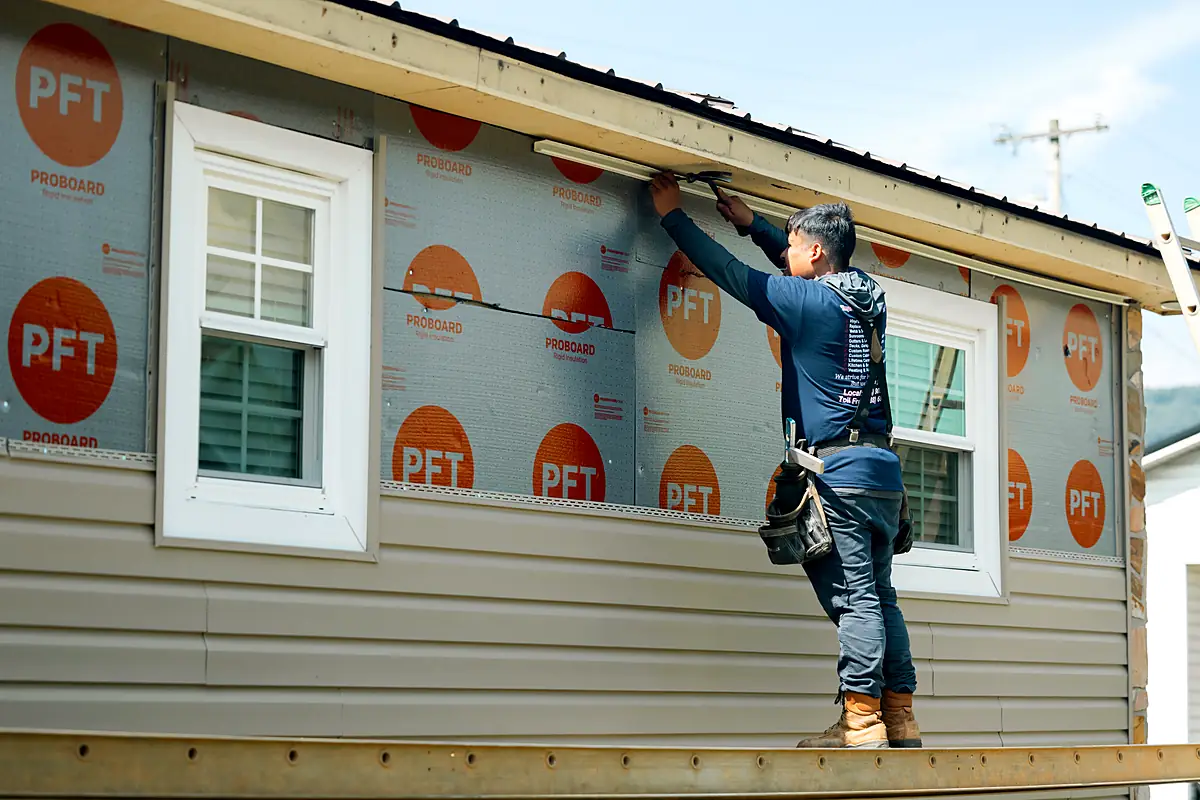
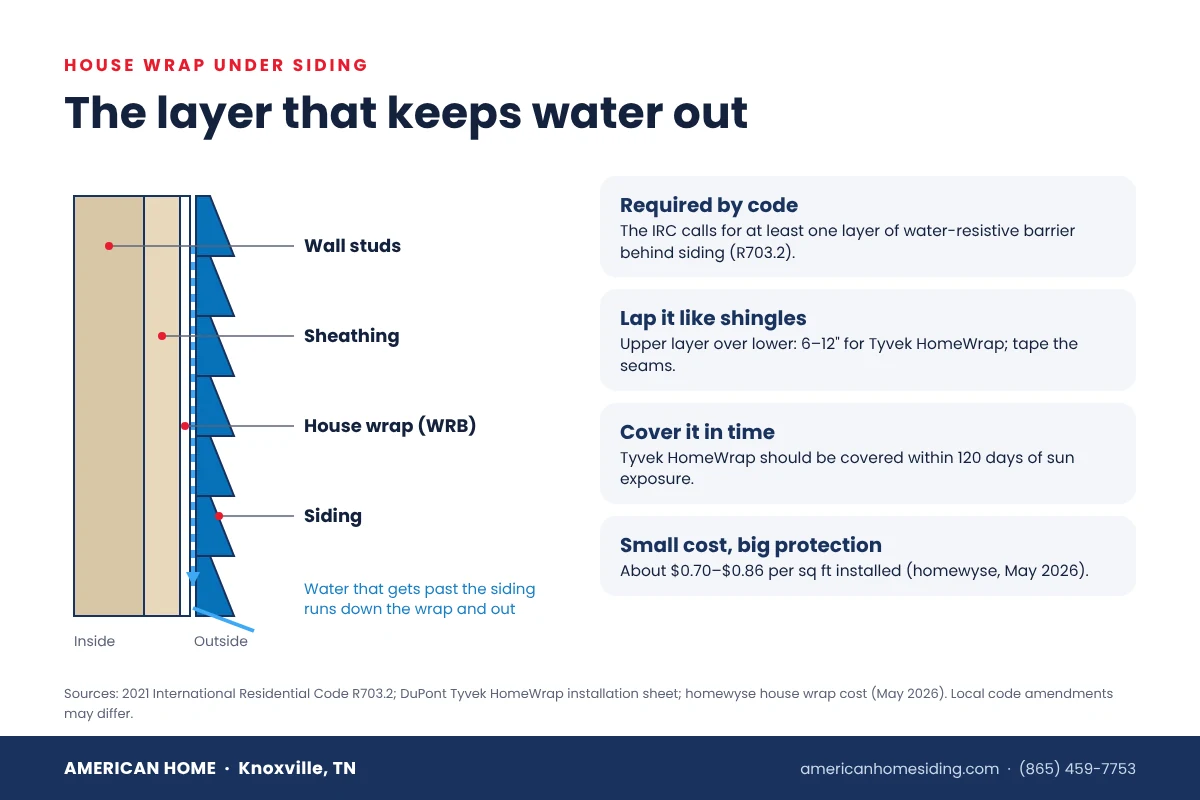
House wrap is a lightweight, water-resistant sheet installed over the wall sheathing and under the siding. Building scientists call it a water-resistive barrier, or WRB. Well-known brands include DuPont Tyvek, but many products are available. It is designed to stop liquid water from reaching the sheathing while still letting water vapor escape, so the wall can dry out.
As Fine Homebuilding puts it, every house needs a dedicated and effective water-resistive barrier. Siding sheds most rain, but wind-driven rain always finds its way behind some of it.
Why house wrap matters under siding
- It keeps water off the sheathing. Water that gets past the siding runs down the face of the wrap and drains out at the bottom of the wall.
- It prevents rot and mold. Wet sheathing and framing lead to rot, mold and soft spots, which are expensive to fix.
- It cuts drafts. A well-taped WRB reduces air leaks through the wall.
- It protects your siding warranty. Siding manufacturers expect a proper water-resistive barrier behind their product.
Is house wrap required by code?
Yes. The International Residential Code (IRC), which Tennessee and most states use as the base for residential building codes, requires at least one layer of water-resistive barrier over the studs or sheathing of exterior walls (Section R703.2 in the 2021 IRC, as summarized by Jaspector). Approved options include No. 15 asphalt felt and wrap products tested to the right standards, installed per the manufacturer’s instructions and lapped so water drains outward.
Local rules can add to or change the model code, so your contractor should know what your city or county inspector expects.
How it should be installed
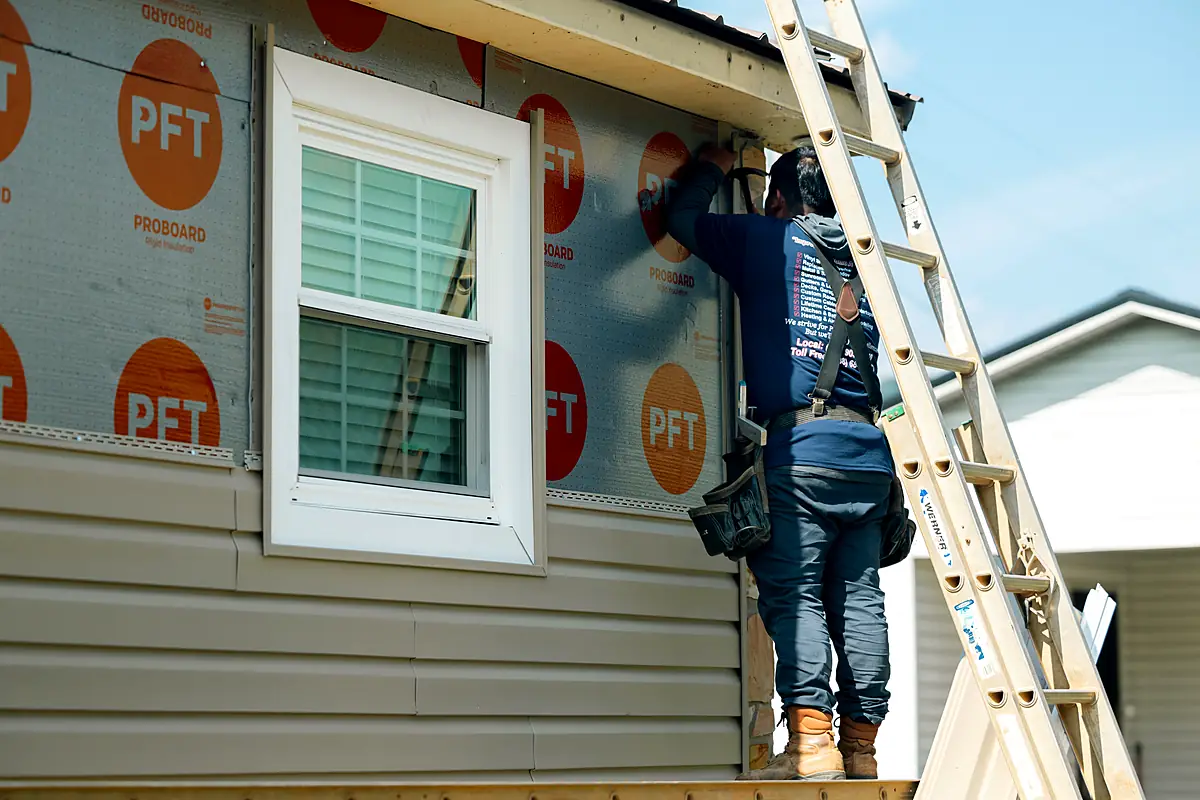
The details matter more than the brand. The DuPont Tyvek HomeWrap installation instructions and building-science guidance agree on a few basics:
- Start at the bottom and lap like shingles. Each upper layer overlaps the one below (DuPont calls for 6 to 12 inches on Tyvek HomeWrap), so water always runs over a seam, never into it.
- Tape the seams with tape made for that product.
- Flash windows and doors correctly. The wrap and flashing tape must be layered so water is directed out and away from the opening.
- Use the right fasteners, such as cap nails or cap staples, so the wrap does not tear.
- Cover it in time. The material is not meant to sit in the sun. Tyvek HomeWrap should be covered within 120 days.
The most common mistakes are reverse-lapped seams (the upper piece tucked under the lower one), torn or patched wrap that is not taped, and flashing installed on top of the wrap where it should be underneath. Each one can funnel water straight into the wall.
Do you need a new WRB when you replace siding?
In most cases, yes. When old siding comes off, the existing wrap or felt is often torn, brittle or missing in spots, and many older homes never had a proper water-resistive barrier at all. Replacing siding is the one time the wall is fully exposed, so it is the right time to fix it. It is also a chance to look for soft or rotted sheathing, one of the hidden signs your siding needs replacing.
How much does house wrap cost?
A WRB is one of the least expensive parts of a siding job. Homewyse estimates about $0.70 to $0.86 per square foot installed (May 2026), including basic flashing and supplies. On a full siding replacement, it is usually a small line item compared with the siding itself. Our siding replacement cost guide explains the bigger price factors.
| Option | What to know |
|---|---|
| Standard house wrap | The most common choice under vinyl, fiber cement and composite siding |
| Drainable or textured wrap | Has small spacers or texture that help water drain and walls dry faster |
| No. 15 asphalt felt | An older, code-approved option still used on some jobs |
House wrap vs. insulated siding
A WRB and insulation do different jobs. The wrap controls water and air; it adds little insulation. If you want better energy performance as well, ask about insulated vinyl siding, which adds a foam backing on top of a proper water-resistive barrier.
Questions to ask your siding contractor
- Will you remove the old siding and install a new water-resistive barrier?
- Which product will you use, and is it approved by the siding manufacturer?
- How will you flash the windows and doors?
- Will you replace any damaged sheathing you find?
A good contractor will answer these clearly and put them in the written quote. See our guide on how to choose a siding contractor in Knoxville for more questions to ask.
Planning new siding? Call (865) 459-7753 or request a free in-home estimate. We will explain exactly what goes behind your new siding, including the water-resistive barrier and flashing, before any work starts.
House wrap FAQ
Can you put siding over old house wrap?
Only if the existing layer is intact, properly lapped and in good condition, which is rare on an older home. Most of the time it is better to replace it while the wall is open.
Does vinyl siding need house wrap?
Yes. Vinyl siding is designed to let water drain from behind it, so it relies on a water-resistive barrier underneath. The building code requires one behind siding.
Which side of house wrap faces out?
Follow the printed side and the manufacturer’s instructions. Branded wrap is typically installed with the printing facing out, so installers can read it.
How long can house wrap be exposed?
It depends on the product. DuPont says Tyvek HomeWrap should be covered within 120 days; other brands set their own limits.